

When I was a midwife in California, a lot of my patients were in the migrant farm worker community and came from Central and South America. Often women would come to their prenatal appointments with their entire family: husband, kids, sometimes their mom or an aunt. Instead of walking into a room to find a lone woman in a paper gown, I’d walk into a room full of people.
It changed everything.
There was something about having more people there that softened the whole dynamic. The visit felt less transactional. I learned more about who this person actually was — their life outside this appointment, the people who mattered to them. Meeting someone’s family is humanizing in a way that a chart never is.
It also kept me sharper. More eyes in the room means more heads in the game. I was more present, more accountable. The patient was calmer. There was a palpable sense of safety that I couldn’t manufacture on my own, no matter how warm I tried to be.
I’ve thought about this a lot since then. What those families were doing, without knowing it, was acting as doulas.
Most people associate doulas with birth. But the research on doulas reveals something more universal: even just having someone physically present for the entire duration of a labor — sitting in the corner, not trained, not doing anything in particular — leads to measurably better outcomes. They don’t need to coach or advocate or even say a word. Their presence alone is the medicine.
I’ve found this to be true for all kinds of medical appointments, not just birth. As both a patient and a provider, I’ve watched the energy in a room shift the moment someone brings a friend. The provider becomes more human. The patient becomes less afraid. Things that might have gone unsaid get said.
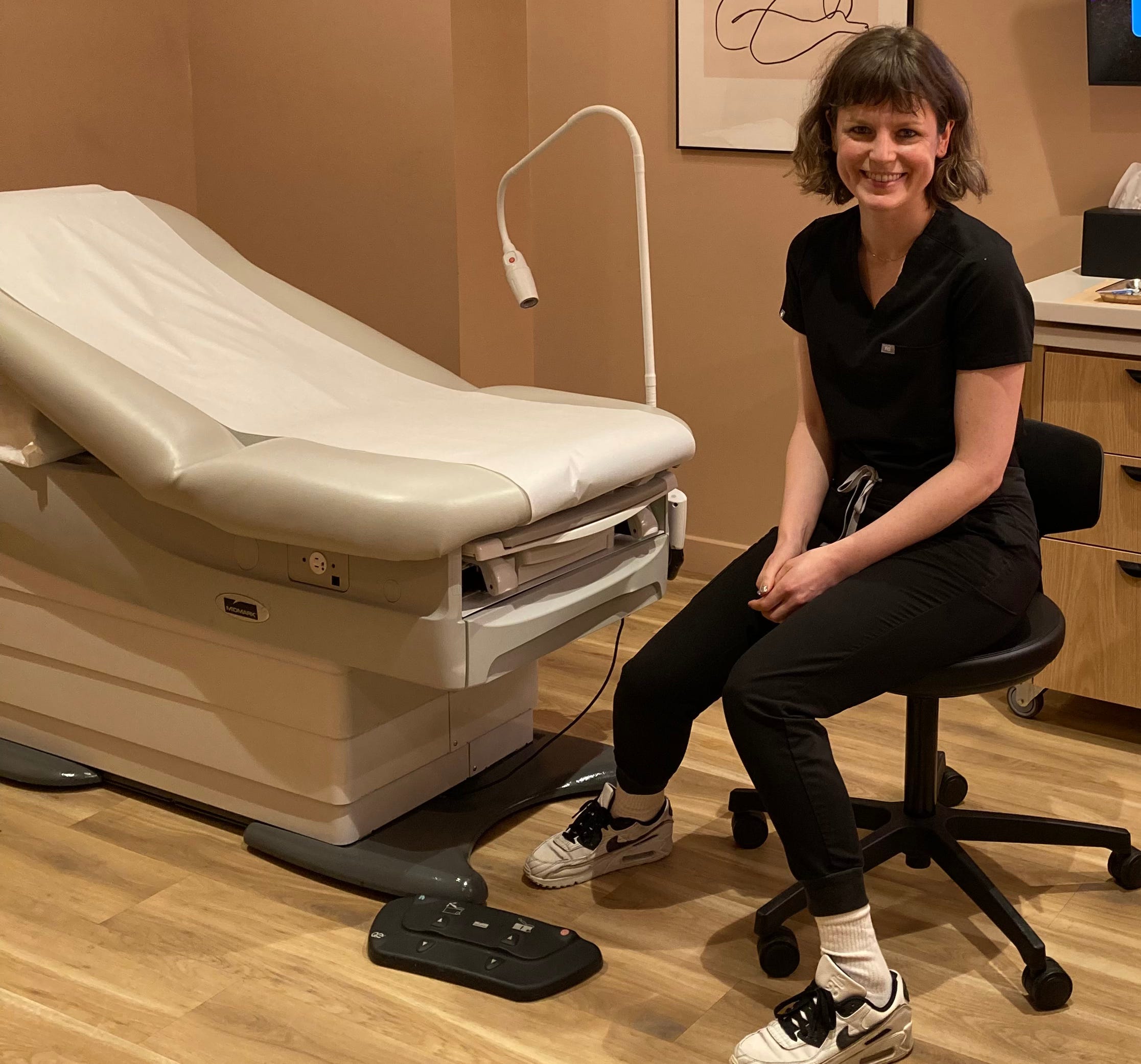
So here’s my suggestion: bring someone with you to your next appointment. Your Pap smear, your annual physical, your follow-up with the specialist you’ve been dreading. It doesn’t have to be your best friend. It just has to be someone on your team.
And if you’re the friend being asked — say yes. It costs you an hour. It might mean everything to your friend.
We are wired for far more communal living than modern life provides. For most of human history, the healer came to you. For an “appointment” you were on your own turf, surrounded by your people. The medical system as it exists today was built around efficiency and liability, not around the nervous system of a human being who needs to feel safe in order to heal.
Bringing someone into that room with you is a small act of resistance. It’s a way of saying: I’m not just a patient. I’m a person. And I brought a witness.
About Me
I’m Jane Riccobono, WHNP, CNM — a Women’s Health Nurse Practitioner and Certified Nurse Midwife with over a decade of experience in women’s health. I work with women who feel a disconnect between the care they’re receiving and the care they need.
I went into healthcare thinking I could change things from inside the system. But after years of watching myself become what I didn’t want to be — rushed, burned out, unable to provide the care I knew women deserved — I had to choose.
I could keep trying to fit myself into a system that treats women’s natural cycles as inconveniences to be managed. Or I could step into what I know to be true: that women’s bodies are wise. That our cycles are sacred. That the pain we experience often carries messages we need to hear. That healthcare can be both scientifically sound and spiritually profound.
This is healthcare for women who know they deserve better. Book a call to learn more — I’d love to meet you.
Follow me on Instagram.
You paint a beautiful picture. Thanks to you, I picture a roomful of people in the birthing room, the doctor's office, at an important consultation, and it makes me smile. I used to think it was nuts to have so many present during a birth, etc, but now I completely appreciate the comfort it brings and am grateful to you for your compassionate insight.