

This morning, my body asked for yoga.
I ignored it. My inner taskmaster said, “No. You have to write a newsletter.” It listed all the reasons I had to sit down at my computer right now. And all the consequences I’d face if I didn’t.
So I sat down. After an hour of staring at the screen, I was frustrated, angry, and foggy-headed. I hadn’t written a single word.
The request for yoga resurfaced. This time, I listened.
Within five minutes on the mat, this entire newsletter came to me so clearly that I had to stop and rush back to my computer.
The Body Knows
This isn’t the first time something like this has happened. Every moment of inspiration I can think of throughout my life has been connected to my body. The body holds tremendous wisdom. It speaks to us and guides us—if only we will listen.
But listening requires faith.
When I walked away from my newsletter this morning, I had no guarantee that doing yoga would lead me back to it. In fact, choosing my body felt like giving up on my work. Like a failure to perform, a failure to be disciplined, and a waste of time.
And yet.
A Story About Devotion
Many years ago, on my first trip to India, I did a Panchakarma retreat at an Ayurvedic center. It consisted of two weeks of a special diet, herbs, and daily purification practices. It was an important initiation into healing for me. I learned deep lessons about the power of intention, the role of mantra, and the healer’s role as someone who holds the possibility of your healing even when you cannot.
One of the other people on the retreat told me a story. It was about a man who had performed perfect yoga postures on his first try, through the power of devotion alone. Before starting his yoga practice, this man devoted it entirely to the Divine. Then, despite having no experience, his body moved like a master—effortlessly twisting into all kinds of difficult shapes.
I don’t know if the story is true, but I believe it. I think about it all the time because it speaks to the power of devotion to help us do what we think is impossible.
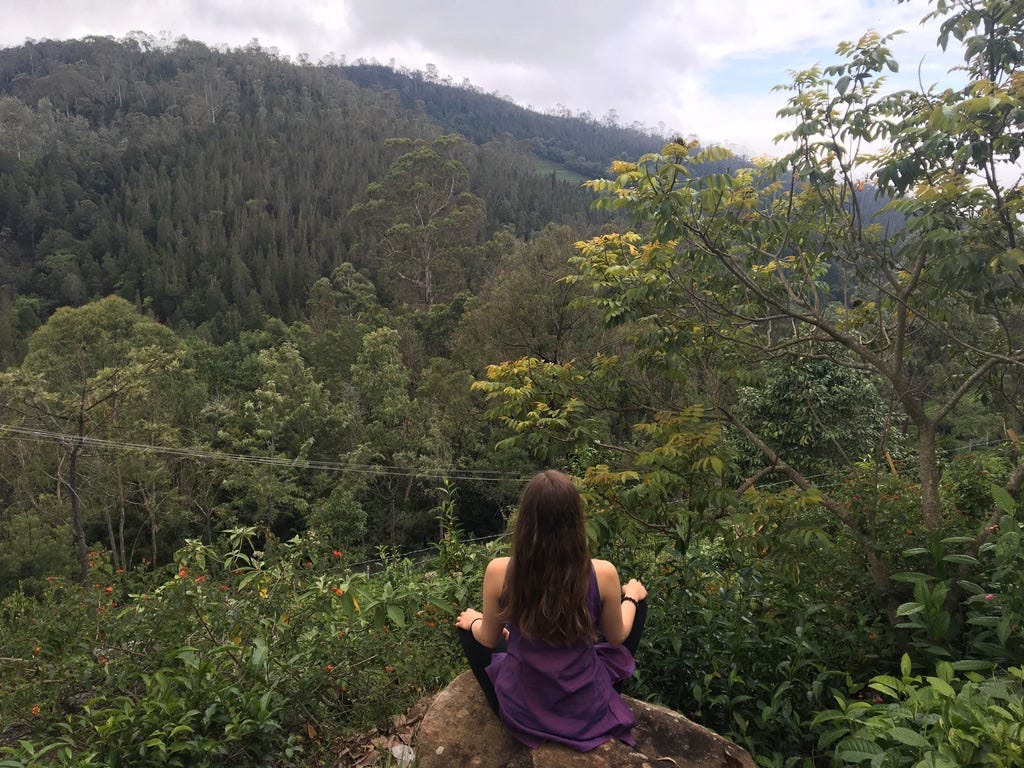
Acting Without Attachment
One of the central lessons of the Bhagavad Gita is to take action without regard for the fruit of the action.
What I understand this to mean is that there is always a best next step to take. But we may not understand why it’s the best step or what it will lead to. We need to listen closely, to feel deeply, in order to know what the best next step is. The message comes from a subtle place—some call it the “still, small voice,” others call it the inner guru or the Divine. It’s a wise inner knowing. It doesn’t explain itself.
To act without regard for the fruit means to act without seeking a prize or fearing negative consequences. To be guided by neither attachment nor aversion, neither greed nor fear.
The man in the story didn’t do yoga to get admiration. He didn’t do it for health, longevity, or endorphins. He did yoga with total devotion to the Divine. He surrendered his actions without wishing for any particular outcome. And then a miracle happened.
But the point isn’t the miracle. I believe the depth of his devotion was itself the reward. We need the spectacular yoga postures to give the story legs (no pun intended). The wonder of the Divine can’t be put into words, in the same way that trying to explain a dream always falls short. The perfect yoga he was able to perform is a metaphor for the flow state that we can access through devotion.
Discipline vs. Control
There’s a difference between what I did this morning and having a strict yoga practice that you do every day, come hell or high water. But the two aren’t mutually exclusive either.
We often relate to exercise as a highly disciplined activity and do it with a forceful, controlling attitude toward the body. This approach may yield results in the body, but it often harms the spirit. It can also lead to short-term physical gains while causing long-term damage.
My approach—in my own life and with patients—is to be in conversation with the body. To listen to the body, because one of the ways the still, small voice speaks to us is through the body.
There’s a place for discipline here too. But not discipline as evil dictator or taskmaster. Rather, discipline as a container within which the body has freedom to communicate. Perhaps discipline is showing up on your mat every day—but after that, your body has free reign to move however it wants.
A Different Kind of Resolution
It’s that time of year when we set New Year’s resolutions. The fitness industry will tell you to commit to working out five days a week, to finally get those abs, to transform your body into something “better.”
But what if we made a different kind of resolution?
What if, instead of another plan to control, fix, or punish your body, you resolved to listen to it?
What if your resolution wasn’t about how your body looks or performs, but about deepening your relationship with the wisdom it already holds?
This kind of resolution isn’t about discipline as force. It’s about discipline as devotion. Not “I will make my body do what I want,” but “I will show up and listen to what my body needs.”
The irony is that when we stop trying to control our bodies and start listening to them, we often end up healthier, stronger, and more at ease than all our forcing ever achieved. But that can’t be the goal—that would just be another fruit we’re grasping for. The practice itself has to be the point.
A Practice for You
I invite you to start this new year with a practice in listening:
Body-Led Yoga
Roll out your yoga mat in front of your altar. If you don’t have an altar, use a candle.
Light the candle.
Close your eyes and connect with your body in a spirit of generosity. Dedicate this time to your body. Thank your body for so often following your commands and doing whatever you want. Give this time to your body. Set the intention to surrender how you think you should be moving, and instead follow the impulses in your body.
Set a timer for one hour. No less. A luxurious amount of time is required.
Follow your body’s impulses to stretch, sway, or move in any way it wants. Maybe you’ll do forward fold for 20 minutes. Maybe you’ll do a complex yoga series. Maybe you’ll wiggle your butt for 10 minutes. You can literally do anything. It doesn’t matter what it looks like. It doesn’t matter if it’s going to make you stronger or more flexible. We’re not looking for any fruits. This is a practice of devotion to your body as sacred.
Important: Stay engaged with the sensations of your body. If you’re not moving, make sure you’ve chosen the stillness and you’re actively feeling it rather than zoning out. Whether moving or still, avoid absentmindedness. Keep bringing your attention into the sensations of your body. If you’re very tired and your body pulls you into sleep, that’s okay—but try to make a conscious choice to follow your body into sleep.
Maybe your New Year’s resolution this year could be to practice body-led movement once a week. Or once a month. Not because you should, but because your body is asking you to listen.
Let me know how it goes.
With love,
Jane
Let’s Connect
If you’re a woman who feels the disconnect between the care you’re receiving and the care you truly need...
If you’re exhausted by a medical system that treats your body as machine and your symptoms as noise...
If you’re seeking a healthcare provider who sees all of you—body, heart, mind, and spirit...
Then I invite you to book a Foundation Session. Ninety minutes where you’re fully seen and heard. Where your medical history and your life story both matter. Where we start figuring out together what your body is trying to tell you and what you truly need.
This is healthcare for women who know we deserve better. Who are ready to trust our bodies again while having the medical support we need. Who refuse to sacrifice our wholeness on the altar of efficiency.
Follow me on Instagram
Devoured this wisdom this morning.